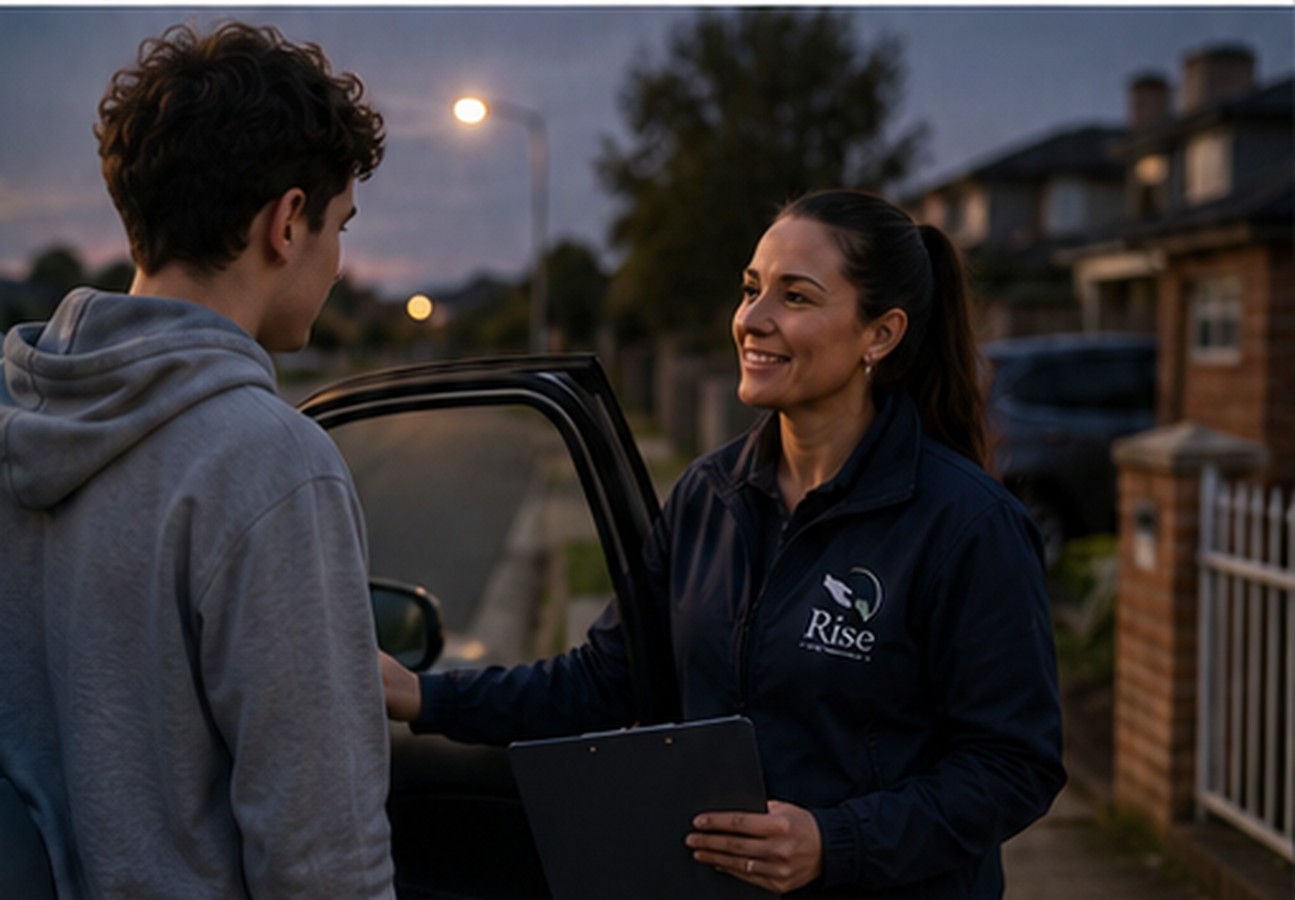
After-hours
services

Clear, practical support for young people, care teams and referring providers.

Rise Care Community after-hours support

What we do

What we do

Crisis outreach & de-escalation

Calm, trauma-informed support to reduce risk and help keep young people safe.

Safe transport & transitions

Safe, respectful transport and support during placement changes.

Placement stabilisation

Practical support that helps reduce risk and stabilise placements.

Family contact support

Support for safe, respectful family contact and reconnection.

Welfare checks & outreach

Proactive outreach and welfare checks when wellbeing or safety is a concern.

Provider communication

Clear, timely updates and collaboration with referring providers.

Support levels

Three support levels

Support levels are matched to the needs, risks and complexity of each referral. The examples below show how this can look within Child Safety residential care.

1

Tier 1
Practical Support

Lower complexity

Practical, preventative and non-emergency support for lower-level needs where additional assistance can help the residential team maintain stability.

  • Welfare checks where there is a low-level wellbeing concern.
  • Routine transport to or from a residential placement, appointment, education or approved activity.
  • Planned family contact support or community access.
  • Low-intensity outreach when a young person is away from placement and contact has been established.
  • Additional hands-on support during evening routines, transitions or other planned activities.
2

Tier 2
Stabilisation Support

Moderate complexity

Targeted, non-emergency support when risk or escalation is increasing and the residential team would benefit from additional experienced workers on the ground.

  • In-person de-escalation alongside the residential care team when behaviours are escalating.
  • Two-worker outreach where additional staffing is required to support safe engagement.
  • Transport following a placement disruption, significant incident or return to placement where additional support is needed.
  • Family contact or community-based support where behavioural or relational needs are more complex.
  • Short-term hands-on assistance to help stabilise a difficult shift and support the care team to re-establish routine.
3

Tier 3
Intensive Response

High complexity

Responsive, higher-intensity support for complex situations requiring experienced workers, enhanced planning and close coordination with the residential care team and referring provider.

  • High-complexity crisis outreach and face-to-face de-escalation alongside residential staff.
  • Support during significant placement instability or an emerging placement breakdown.
  • Complex transport where there are heightened behavioural, absconding or safety risks and additional workers are required.
  • Intensive welfare outreach when a young person’s location, engagement or return to placement requires a coordinated approach.
  • Hands-on support after a significant incident, including stabilisation, transition planning and clear provider updates.

Important: Tier allocation is based on the information available at referral, assessed risk, staffing requirements and the support requested. Immediate or life-threatening emergencies require 000.

Not sure which service fits your referral?Talk with our team.